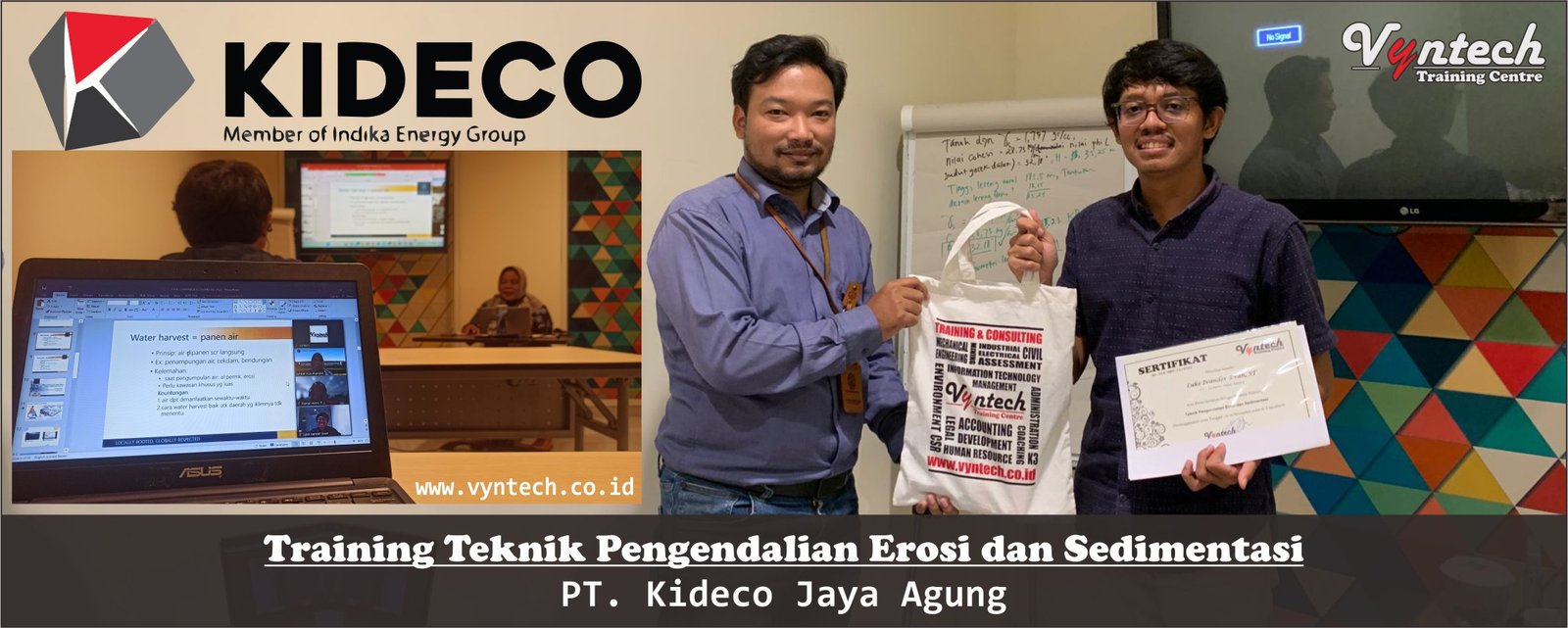
Silabus bahasa Indonesia -> Training Teknik Pengendalian Potensi Erosi dan Sedimentasi
“Strategi Pengendalian Erosi dan Sedimentasi untuk Stabilitas Lahan dan Perlindungan Lingkungan”
Course Overview
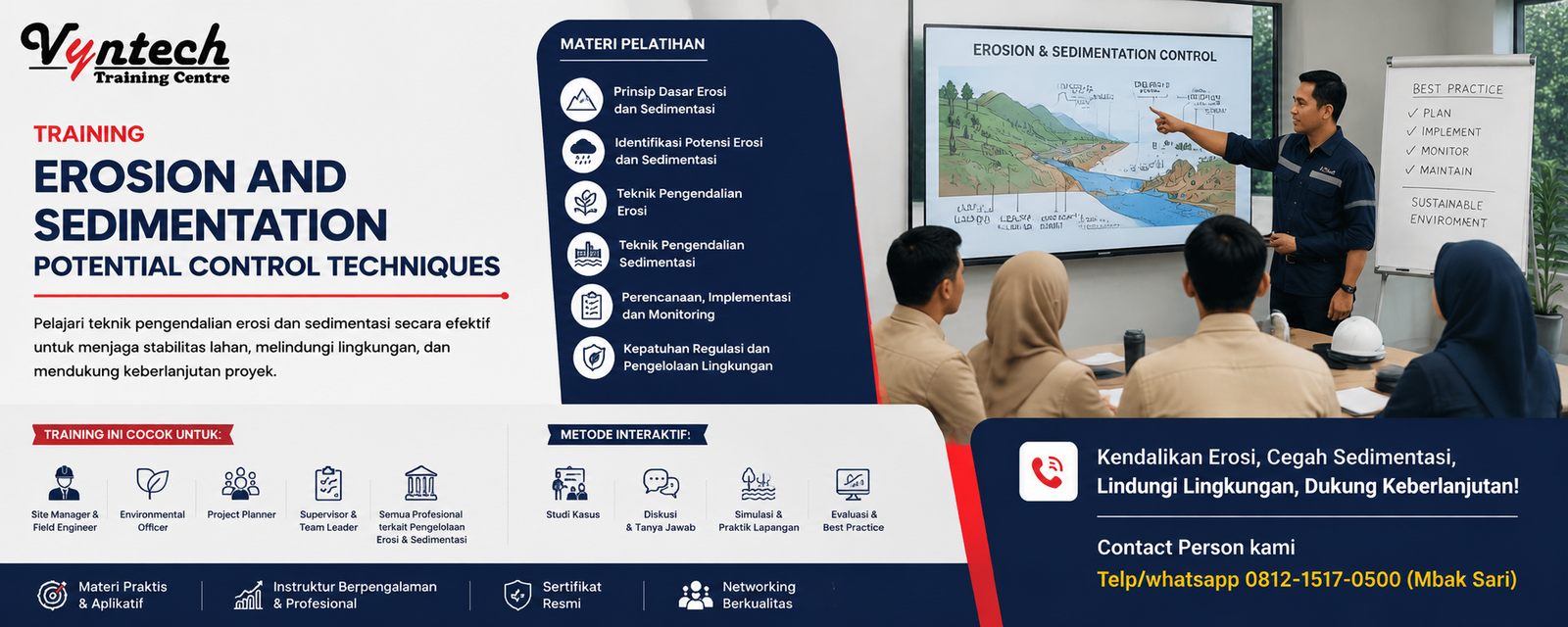
Soil erosion and sedimentation buildup are major environmental challenges in construction, mining, forestry, and watershed management projects. Without proper control techniques, erosion and sedimentation can degrade soil structures, pollute water bodies, harm aquatic ecosystems, and trigger severe environmental regulatory violations.
This Erosion and Sedimentation Potential Control Techniques training program is designed to equip participants with deep knowledge regarding erosion potential analysis, eco-friendly drainage system planning, sedimentation control structure installation, and the development of comprehensive control plans aligned with applicable environmental quality standards.
Training Objectives
-
-
Understand the mechanisms of soil erosion and the impact of sedimentation on ecosystems and infrastructure.
-
Master calculation and mapping methods for soil erosion potential (Universal Soil Loss Equation – USLE).
-
Design and implement effective erosion and sediment control techniques (Best Management Practices – BMPs) in the field.
-
Prepare management and monitoring plan documents for erosion and sedimentation in compliance with environmental regulations.
-
Optimize land rehabilitation, revegetation, and long-term maintenance techniques for control structures.
-
Course Outline
-
Erosion and Sedimentation Concepts
-
Definition, types of erosion (sheet, rill, gully, and stream bank erosion), and the sedimentation cycle.
-
Impacts of erosion and sedimentation on water quality, environmental carrying capacity, and project operations.
-
-
Causative Factors and Erosion Potential Estimation
-
Influence of climatic factors (rainfall), soil characteristics, topography (slope gradient), and land cover.
-
Modeling and calculating soil loss severity using USLE / MUSLE / RUSLE methods.
-
-
Erosion-Sedimentation Control Regulations and Standards
-
Environmental laws and legal frameworks regarding soil and water conservation.
-
Surface water quality standards and turbidity thresholds.
-
-
Field Erosion Control Techniques (Erosion Control BMPs)
-
Selection and installation of erosion control blankets/mats, mulching, and geotextiles.
-
Slope stabilization techniques, terracing, and protective cover establishment (revegetation).
-
-
Sedimentation Control Techniques (Sediment Control BMPs)
-
Planning and construction of sediment basins and sediment traps.
-
Installation of silt fences, check dams, silt curtains, and temporary sediment barriers.
-
-
Drainage Systems and Surface Runoff Management (Stormwater Management)
-
Design of temporary and permanent drainage channels to control flow velocity.
-
Application of energy dissipators to prevent gully erosion.
-
-
Field Monitoring, Inspection, and Effectiveness Evaluation
-
Routine inspection procedures for erosion and sedimentation control facilities at project sites.
-
Water sampling, turbidity testing, and evaluation of BMP efficiency.
-
-
Erosion and Sediment Control Plan (ESCP) Development
-
Land use mapping and erosion-prone zone identification.
-
Drafting integrated Erosion and Sediment Control Plan (ESCP) documents.
-
-
Maintenance and Rehabilitation of Control Structures
-
Dredging and periodic sediment cleanout procedures for settling ponds.
-
Post-construction and post-mining land closure techniques (reclamation and revegetation).
-
-
Common Implementation Obstacles and Troubleshooting
-
Identifying extreme weather challenges, land constraints, and structural control failures.
-
Formulating troubleshooting strategies to optimize field control systems.
-
-
Case Studies and Group Discussions
-
Analysis of erosion control failure cases in infrastructure and mining projects.
-
Interactive discussions, field solution simulations, and drafting action recommendations.
-
Key Benefits
-
-
Minimize risks of environmental degradation, water pollution, and regulatory non-compliance penalties.
-
Increase cost efficiency in project infrastructure maintenance caused by erosion and siltation.
-
Master practical applications of Best Management Practices (BMPs) in handling erosion and sedimentation.
-
Build capacity to construct structured and standardized Erosion and Sediment Control Plan (ESCP) documents.
-
Reduce potential social conflicts with local communities regarding mud runoff and sediment impacts.
-
Audience
-
-
Environmental Engineers, Specialists, and Officers in Mining, Construction, and Energy industries.
-
Civil Engineers, Project Engineers, and Site Managers overseeing earthworks.
-
Staff from Watershed Management Agencies (BPDAS), Environmental Agencies (DLH), and related government institutions.
-
Environmental Consultants, Environmental Auditors, and EIA (AMDAL / UKL-UPL) Assessors.
-
Academicians, Researchers, and Practitioners in water resources and environmental management.
-
Training Venues
-
-
Yogyakarta: Ibis Styles Hotel Yogyakarta
-
Bandung: Gino Feruci Hotel Bandung
-
Jakarta: Dreamtel Hotel Jakarta
-
Bali: Harris Seminyak Hotel Bali
-
Online Training* (Interactive Live via Zoom/Teams)
-
In House Training* (Customized training delivered directly at your company/agency location)
-
Facilities
-
-
Training Course Materials
-
Exclusive Training Kits
-
Coffee Break & Lunch
-
Official Certificate
-
Souvenir
-
Training Investment
Get a special offer (Special Corporate Rate/Group Discount) by contacting our Customer Service team.
👉 Click here to Chat via WhatsApp with Vyntech Customer Service
or please fill out the form below: