Silabus bahasa indonesia –> Training Blasting Engineering: Operational Safety, Fragmentation Optimization & Cost Efficiency
Course Overview
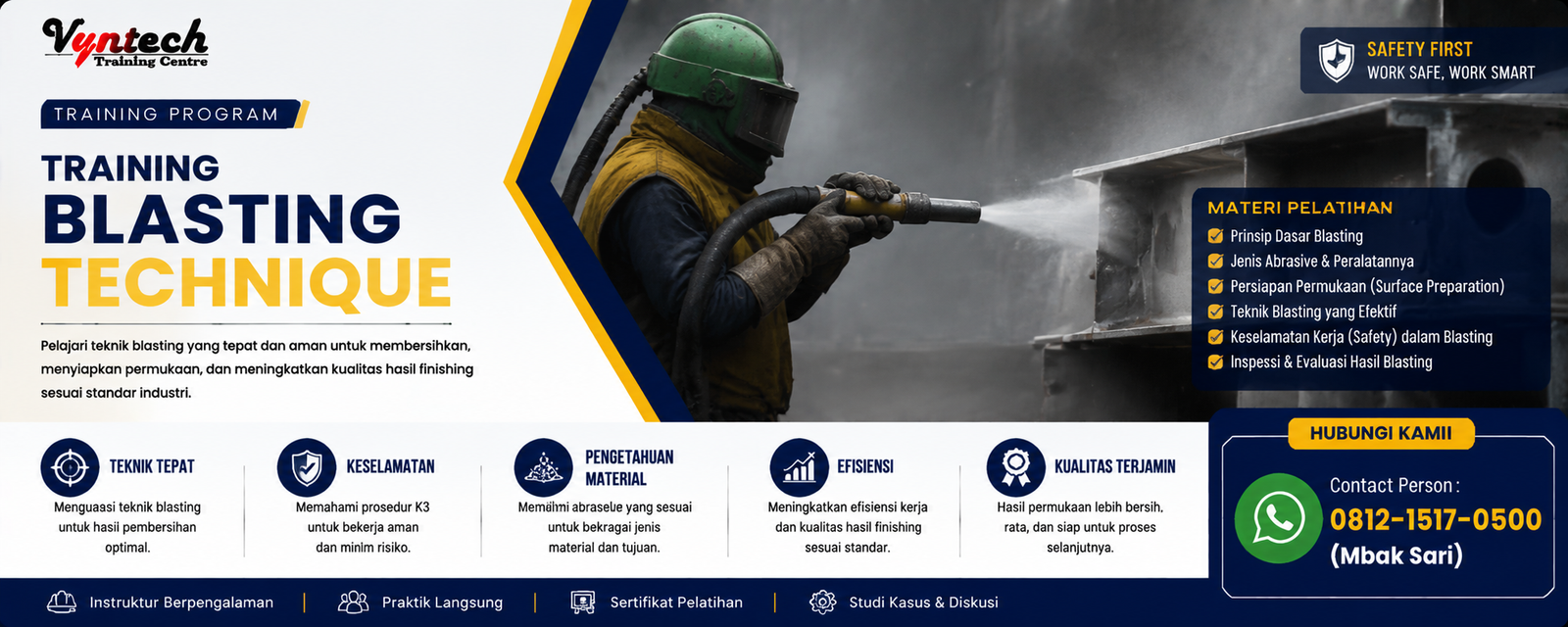
Rock blasting (blasting) is one of the most critical operational stages in mining, civil construction, and quarrying operations for rock fragmentation. Blasting operations demand high precision, accurate blasting geometry calculations, strict compliance with Occupational Health and Safety (OHS) standards, and environmental regulations to minimize occupational risks and environmental impacts.
The Blasting / Rock Blasting Techniques training program is specifically designed to equip mining engineers, blasters, and field practitioners with comprehensive knowledge ranging from explosive properties, drilling and blasting geometry design, initiation and circuit connection techniques, to blast hazard controls (flyrock, ground vibration, noise, and airblast).
Training Objectives
-
-
Understand blasting safety regulations (ESDM Ministerial Decrees), legal compliance, and explosives licensing procedures.
-
Master the physical and chemical properties of commercial industrial explosives (ANFO, Emulsion, Slurry, Boosters, Detonators).
-
Design precise and efficient drilling and blasting geometry (burden, spacing, stemming, subdrilling).
-
Master initiation systems (electric, non-electric/nonel, electronic detonators), circuit connections, and delay sequencing.
-
Control adverse blasting impacts (ground vibration, flyrock, airblast, and poisonous gases).
-
Formulate Standard Operating Procedures (SOP) for explosive storage, transportation, handling, and rock fragmentation evaluation.
-
Course Outline
-
Blasting Safety Regulations and Governance
-
Ministry of Energy and Mineral Resources (ESDM) decrees on Good Mining Practice and blasting OHS.
-
Licensing procedures, supervision, and Blaster Certification requirements (KPP Pertama & Kedua).
-
-
Properties and Types of Commercial Explosives
-
Physical and chemical properties: Density, Velocity of Detonation (VOD), detonation pressure, and gas volume.
-
Detonator-sensitive explosives (cap-sensitive), booster-sensitive agents (ANFO, Emulsion, Heavy ANFO), and initiating devices.
-
-
Rock Fragmentation Mechanics
-
Rock mass characteristics (geomechanics, jointing, RQD) and their effects on blasting performance.
-
Shock wave propagation and gas expansion processes within rock masses.
-
-
Drilling and Blasting Geometry Design
-
Calculating blast geometry using industry standards (Langefors, RL Ash, Konya): Burden, spacing, stemming, subdrilling, and powder factor (PF).
-
Drill hole layout patterns and depth design tailored to target fragmentation requirements.
-
-
Initiation Systems and Blast Delay Timing
-
Application of conventional, Non-Electric (Nonel), and Electronic Detonator systems.
-
Designing delay sequencing and timing patterns to optimize fragmentation and suppress vibration.
-
-
Field Blasting Operations and Execution
-
Explosive charging techniques, stemming procedures, and tie-in methods.
-
Pre-blast protocols, danger zone barricading, and area clearing procedures.
-
-
Environmental Impact Control and Hazard Mitigation
-
Measuring and analyzing ground vibration (Peak Particle Velocity – PPV) and airblast.
-
Flyrock control strategies, toxic gas (fumes) management, and misfire handling procedures.
-
-
Explosives Storage and Transportation Management
-
Technical and security compliance for explosives magazines (detonator-sensitive & booster-sensitive stores).
-
Internal and external transportation protocols meeting National Police (POLRI) and ESDM standards.
-
-
Blast Evaluation and Digitalization in Blasting
-
Rock fragmentation measurement using WipFrag / Photogrammetry techniques.
-
Introduction to blast simulation software, VOD meters, and blast seismographs.
-
-
Common Barriers and Solutions in Implementation
-
Addressing wet blast holes, highly fractured ground, misfires, and community vibration concerns.
-
Formulating practical troubleshooting strategies for field blasting issues.
-
-
Case Studies and Discussion
-
Reviewing blasting accident investigations and operational failures in mining and quarry sites.
-
Geometry calculations, timing delay design, and powder factor optimization exercises.
-
Key Benefits
-
-
Regulatory Compliance & Safety: Ensure blasting operations comply with ESDM and POLRI mandates to achieve zero-accident goals.
-
Cost Optimization: Optimize powder factor usage and drilling costs without compromising rock fragmentation quality.
-
Asset & Environmental Protection: Minimize structural damage risks to surrounding assets and resolve community vibration complaints.
-
Productivity Enhancement: Achieve optimal fragmentation sizes to improve digging productivity (diggability) and crushing throughput.
-
Competency Development: Elevate technical expertise for mining engineers and blasters in certification and operational audits.
-
Audience
-
-
Mining Engineers, Drill & Blast Engineers, and Pit Control Engineers.
-
Blasters, Blasting Foremen, and Supervisors in surface mining and quarries.
-
Chief Mine Engineers (KTT), Mining Operation Managers, and HSE Officers.
-
Drilling & Blasting Contractors and Commercial Explosives Vendors.
-
Government Mining Inspectors from Energy & Mineral Resources Departments, Environmental Agencies, and Police Personnel.
-
Training Venues
-
-
Yogyakarta: Ibis Styles Hotel Yogyakarta
-
Bandung: Gino Feruci Hotel Bandung
-
Jakarta: Dreamtel Hotel Jakarta
-
Bali: Harris Seminyak Hotel Bali
-
Online Training* (Interactive Live via Zoom/Teams)
-
In House Training* (Customized training delivered directly at your company/agency location)
-
Facilities
-
-
Training Course Materials
-
Exclusive Training Kits
-
Coffee Break & Lunch
-
Official Certificate
-
Souvenir
-
Training Investment
Get a special offer (Special Corporate Rate/Group Discount) by contacting our Customer Service team.
👉 Click here to Chat via WhatsApp with Vyntech Customer Service
or please fill out the form below: